Shopify + QuickBooks
Orders become invoices, refunds become credit memos, and payouts match your deposits.
From $3,400Price this
We connect your store, accounting, CRM and custom software so orders, invoices and customers move on their own. You get a fixed price per connection, code you own, and a daily report that proves nothing went missing.
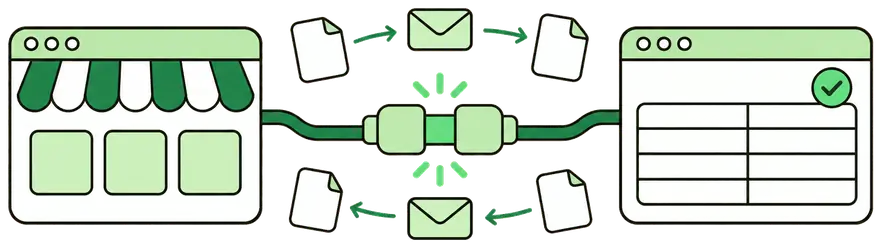
Orders, customers and refunds from Shopify go into QuickBooks as invoices, customers and payments.
Shopify's older REST API allows 2 requests a second and has been legacy since October 2024, so we build on GraphQL. QuickBooks Online and QuickBooks Desktop connect in different ways, so we confirm which one you run first.
API integration connects two pieces of software so they share data on their own. Your team keeps the same screens, and the retyping stops.
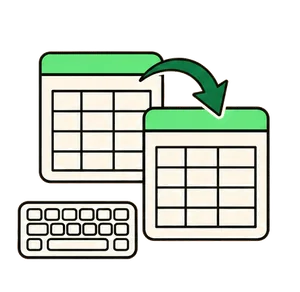
Someone retypes every order into accounting.
Orders become invoices within minutes.
Sales and finance keep different customer lists.
One update reaches both systems, with a rule for which one wins.
You export a spreadsheet every Friday to see the numbers.
The numbers are already there when you open the report.
Stripe payouts never quite match the bank.
Payments, fees and refunds post on their own, so deposits match.
Your automation failed, and nobody noticed for a week.
You get an alert the same hour, and the missed records replay.
Each price is for one direction. Click one to see it in the picker at the top, or tell us your own pair.
Orders become invoices, refunds become credit memos, and payouts match your deposits.
Closed deals become invoices, and paid status shows up on the deal.
Payments, fees and refunds post on their own, so payouts match the bank.
Payments and subscriptions show on the contact, and deals close when paid.
Won deals become invoices, and balances show up on the account.
Orders flow into NetSuite, and stock and fulfillment flow back.
Won deals become sales orders, and order status shows up on the account.
Daily sales, refunds and fees post on their own, ready for your bookkeeper.
Your app sends customers and activity to your CRM, whether or not it has an API today.
A sample log from a Shopify and QuickBooks connection. Pick what goes wrong.
Every morning it compares yesterday's records and totals in both systems. If anything differs, the email names the record and the reason.
| Shopify | QuickBooks | Match | |
|---|---|---|---|
| Orders and invoices | 214 | 214 | Yes |
| Refunds and credits | 6 | 6 | Yes |
| Total sales | $18,442.10 | $18,442.10 | Yes |
No hourly billing, no per-task fee and no paid discovery phase. Your written quote arrives within 24 hours.
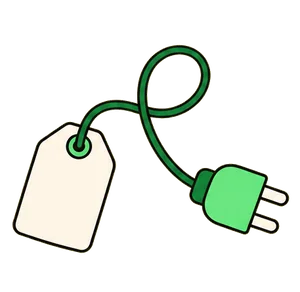
Data moves in one direction. Orders into accounting, or leads into a CRM.
Both systems stay in step, with rules for which one wins when they disagree.
We build an API for your software, with keys, limits and documentation, so partners and your own apps can connect.
Connector tools like Zapier and Make are quick and good at low volume. Here's how we'd decide, and we'll tell you if you don't need us.

These come from each vendor's own developer documents and from how these systems behave, so your connection is built for its real limits from day one.

Shopify's older REST API allows 2 requests a second and has been legacy since October 2024, so we build on GraphQL.
Price a connectionQuickBooks Online and QuickBooks Desktop connect in different ways, so we confirm which one you run first.
Price a connectionXero allows 60 calls a minute, 5 at a time, and 1,000 to 5,000 a day depending on the app's tier, so big catch-ups have to be paced.
Price a connectionCustom fields and records differ from account to account, so mapping takes the most time.
Price a connectionDaily API calls are capped. Enterprise Edition starts at 100,000 per 24 hours plus an allowance per license, and your other tools share that budget.
Price a connectionHubSpot allows 100 to 190 requests per 10 seconds per app, and 250,000 to 1,000,000 a day per account depending on your plan.
Price a connectionStripe allows 100 requests a second in live mode, and its events can arrive out of order or more than once, so the code has to handle both.
Price a connectionSales, refunds and payouts post at different times, so matching them to bank deposits takes care.
Price a connectionZendesk allows 200 to 700 requests a minute depending on your plan, and your other apps share that limit.
Price a connectionPeople can rename a column at any time, so we add checks that catch it the same day.
Price a connectionWe read your code or database first and, if you need one, build the API too.
Price a connectionNo API is fine. We connect through the database, files or email, for an added $1,200.
Price a connectionLimits checked November 4, 2026. They change, and they vary by plan. Sources: Shopify, Xero, Salesforce, HubSpot, Stripe, Zendesk.
This is the schedule for one connection. A clean day means the match report shows no unexplained differences.

You name the two systems. We send a fixed quote within 24 hours.
We map every field with you and get test accounts. You approve one page: what moves, when, and which system wins.
We build it in test accounts and run your real sample records through it.
It runs on live data for seven days while your current process stays in place, and you check the match report each morning.
You get 90 days of fixes, including changes the vendor makes to its API.
Straight answers on cost, failures, ownership and when you do not need us.
API integration connects two pieces of software through their APIs, so they share data on their own. An order in your store can become an invoice in your accounting software without anyone retyping it.
Our fixed prices are $3,400 for a one-way connection, $6,200 for a two-way connection and $8,600 to build your own API. NetSuite or Salesforce adds $1,400 each, a system with no API adds $1,200, and each data type beyond the first three is $450.
One to two weeks for a one-way connection, two to four for two-way and three to five for a new API. NetSuite, Salesforce or a system with no API usually adds about a week.
Often you should. They are quick and good at low volume. Custom makes sense when task fees keep climbing, when both systems must stay in step, or when a silent failure would cost you real money. If a tool will do, we will tell you.
Nothing is lost. Records wait in a queue and go through in order when the system comes back, and your team gets an alert if the outage lasts.
It happens. For 90 days after go-live, we fix it at no charge. After that, optional care at $240 a month keeps watch for vendor changes and updates the connection.
Every connection sends a daily match report. It compares records and totals in both systems and names any record that differs, along with the reason.
Usually, yes. We can connect through the database, file exports or email. That adds $1,200 because there is more to build and test.
Yes. Our API development services cover your own software too: endpoints, keys, limits and documentation, so partners and your own apps can connect. Custom API development is $8,600 at a fixed price.
Yes. We connect CRMs like Salesforce and HubSpot to accounting and ERP systems like QuickBooks and NetSuite. CRM integration, Salesforce integration and other custom API integration work are all priced per connection. If you need the system built too, see custom CRM and ERP.
You do. It lives in your repository and runs on your own server or cloud account. There is no per-task or per-record fee, and it keeps running if you stop working with us.
Only the hosting. A typical connection fits on a small server, which lists from about $24 a month at DigitalOcean. Optional care is $240 a month if you want us to watch it.
Data moves over encrypted connections, keys are stored encrypted on your account, and the connection reads only the fields it needs. Logs keep record IDs and reasons, not card numbers.
One person who knows the data, admin access or API keys for test accounts, and a few real sample records. We work by email, so there are no standing meetings.